
Basic Information
| Field | Details |
|---|---|
| Full name | Edna Mae Pirtle |
| Also known as | Edna Mae Page, Edna Mae Darby |
| Birth | August 14, 1901, Toone, Hardeman County, Tennessee |
| Parents | Ewing Wesley Pirtle and Eliza Virginia Pugh Pirtle |
| Marriages | Walter Roy Page, married October 17, 1920, Madison County, Tennessee. Later married a Mr. Darby, date unknown. |
| Children | Six with Walter Roy Page: Bettie Mae, William J. Billie, James Jimmie, Jack, Goldie Jane Gloria, Elizabeth Joyce Lub |
| Occupations | Homemaker, hairdresser by day, laundry worker by night |
| Residence | Tennessee, primarily the Nashville area during adulthood |
| Death | 1986, Nashville, Davidson County, Tennessee, age 84 to 85 |
| Burial | Pleasant Hill Baptist Church Cemetery, Jackson, Madison County, Tennessee |
| Known for | Steadfast, cheerful resilience while raising six children through poverty and upheaval |
Early Years in Rural Tennessee
On August 14, 1901, Edna Mae Pirtle was born in Toone, a small village with red clay roads, farm tasks, and close families. Ewing Wesley Pirtle and Eliza Virginia Pugh raised her in Hardeman County. Her youth is little known, but her modest Southern environment made resourcefulness a habit. Early years shaped her practicality and steady, cheerful demeanor, which would become her signature as 1930s storms gathered.
Marriage to Walter Roy Page and a Growing Family
Edna married mechanic and laborer Walter Roy Page in Madison County, Tennessee, on October 17, 1920. Early years were lean and mobile for the family. Bettie Mae Page, their second child, arrived in 1923. The 1920s and 1930s saw four more children, bringing the total to six. The Pages sought work and cheap accommodations during the recession. The Great Depression camped on the stoop, not at the door. In the early 1930s, Walter was convicted of car theft and served two years in prison. Unstable home stability crumbled.
The pressure on Edna grew to a constant thrum. Money was short, rent was uncertain, and small comforts gave way to necessity. Yet the record repeatedly credits her with a lightness of spirit. She smiled, neighbors said, even when the pantry thinned.
Divorce, Work, and the Orphanage Decision
By 1933, Bettie was ten and Edna divorced Walter. She confronted the grim math of a single mother in a country recovering from economic catastrophe. By day, she walked and talked as a hairdresser, earning money from curls and cuts. Laundresses carried pails and wringers at night to wash garments.
Survival required tough choices with six kids and two jobs. She placed Bettie and two sisters in a Protestant orphanage for a year. It was a short-term solution to save the family. Long in memory, short in calendar time. Edna worked, saved, and brought her daughters home when she could.
Life in Nashville as a Single Mother
Nashville was large enough to give job yet close enough to family for the Pages in the 1930s and 1940s. Edna carried the household. The oldest son, Billie or William J., assisted his mother financially and cared for younger siblings. They relocated when necessary. They cut costs because they had to. Home was simple, budget lean, food dependable. Edna was often described as the fireplace’s steady blaze, warming rather than dazzling.
Family relationships were complicated and difficult. Bettie later describes Walter’s domestic abuse, including renting rooms from Edna after the divorce. The household scaffolding appeared normal, but it held trauma, reconciliation attempts, and the narrow line between necessity and safety. Edna always prioritized keeping the children together, feeding them, and finding the next day’s revenue.
Remarriage and Later Years
Edna remarried Mr. Darby after the 1940s. The marital details are lost, reminding us that working-class women’s lives often fall through the archive comb. She retired in Tennessee, away from the spotlight. She was buried in Jackson, Madison County’s Pleasant Hill Baptist Church Cemetery after dying in 1986 in Nashville. Her gravestone records her long life but not her labor and love.
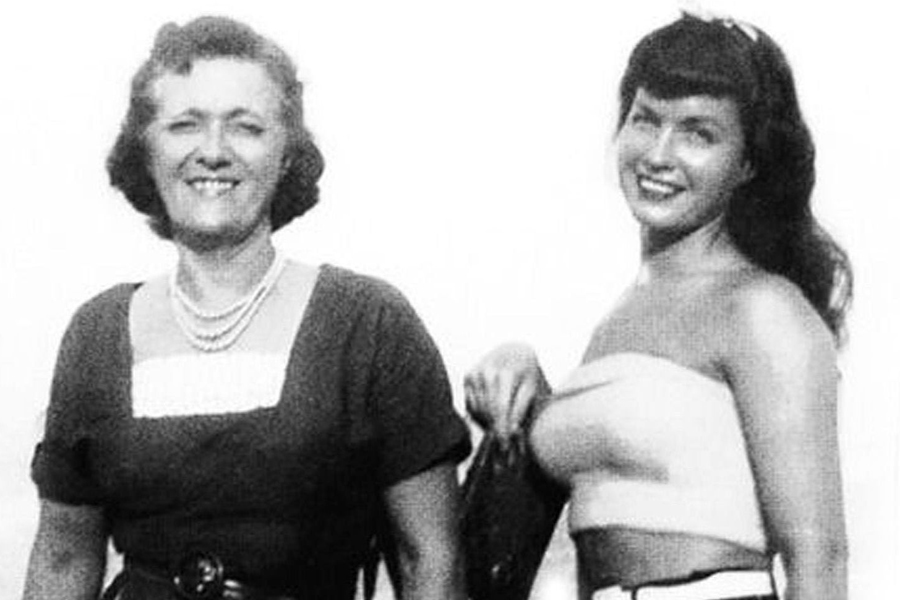
Children and Family Ties
Edna’s story runs through her children. She raised six in a time when each extra plate at supper was a small feat. One would become an American icon. The others kept their names out of lights and lived their lives with the kind of dignity that prefers privacy.
- Bettie Mae Page, born in 1923, second of six, became the Queen of Pinups in the 1950s. Her public fame cast a retrospective glow on the family’s past, and she later spoke of her mother’s grit and the challenges they faced.
- William J. Billie Page, often mentioned as the eldest son, helped Edna shoulder costs and care during the most difficult years.
- James Jimmie Page is recorded as an early son and lived into the 2000s. Details vary in public records.
- Jack Page remained in the Nashville orbit and is noted in family remembrances decades later.
- Goldie Jane Gloria Page maintained a close bond with Bettie and is remembered for hand-coloring family photographs. Her son, Ron Brem, would later document aspects of the Page family story.
- Elizabeth Joyce Page, nicknamed Lub and later known as Joyce Wallace, served as Bettie’s confidante for life and offered sisterly ballast through change.
Family Snapshot
| Name | Relation | Years | Notes |
|---|---|---|---|
| Ewing Wesley Pirtle | Father | Rural Tennessean, limited public details | |
| Eliza Virginia Pugh Pirtle | Mother | Homemaker, matriarchal anchor in Hardeman County | |
| Walter Roy Page | First husband | 1896 to 1964 | Mechanic and laborer, legal troubles in early 1930s, marriage ended in divorce |
| Mr. Darby | Second husband | Married post 1940s, details unknown | |
| Bettie Mae Page | Daughter | 1923 to 2008 | Iconic 1950s pinup, second of six children |
| William J. Billie Page | Son | Assisted with family support during the Depression | |
| James Jimmie Page | Son | circa 1924 to 2006 | Early son, lived into the 21st century |
| Jack Page | Son | Lived in Nashville in later years | |
| Goldie Jane Gloria Page | Daughter | 1925 to 2004 | Mother of Ron Brem, close to Bettie |
| Elizabeth Joyce Lub Page | Daughter | Later Joyce Wallace, lifelong confidante of Bettie | |
| Ron Brem | Grandson via Goldie | Researcher and chronicler of Bettie Page family history |
Possible Pirtle Siblings
Records hint that Edna may have had siblings such as Walter Ewing Pirtle and a sister named Nora. The data is incomplete, the kind of genealogical thread that frays with time. Even so, the names linger, part of the extended fabric of a family rooted in West Tennessee.
Work, Money, and the Art of Making Do
Edna’s career is a record of determination. Daytime hairdresser, nighttime laundry worker, always homemaker. She has no promotions, titles, or letters on her resume. The tacit triumphs of the era—a shelter, children, debts, and meals stretched without breaking the spirit—are still there. She had no public career, business to sell, or inheritance to soften. She demonstrated that calm, daily courage can be heroic.
Timeline
| Date | Event |
|---|---|
| August 14, 1901 | Born in Toone, Hardeman County, Tennessee |
| October 17, 1920 | Married Walter Roy Page in Madison County, Tennessee |
| 1923 | Birth of daughter Bettie Mae Page |
| Early 1930s | Walter convicted of car theft and imprisoned for approximately two years |
| Circa 1933 | Divorces Walter. Begins two-job routine to support six children |
| Circa 1933 to 1934 | Temporarily places Bettie and two sisters in a Protestant orphanage, about one year |
| 1930s to 1940s | Raises children in Nashville area under financial strain |
| Post 1940s | Remarries to Mr. Darby, details not recorded |
| 1964 | First husband Walter Roy Page dies |
| 1986 | Edna dies in Nashville, buried in Pleasant Hill Baptist Church Cemetery |
Places That Shaped Her
- Toone, Hardeman County: The rural cradle of her early life.
- Madison County: Site of her 1920 marriage and later resting place in a county cemetery.
- Nashville, Davidson County: The city where she earned wages, kept rooms, and fought for household stability through the 1930s and 1940s.
- Pleasant Hill Baptist Church Cemetery, Jackson: A quiet spot of earth where her name is carved in stone.
Character and Legacy
Those who mention Edna remark about her cheer as a habit and decision. She laughed readily. She persisted. She advised her kids to stay alert. She is best remembered through her daughter Bettie, whose fame frequently hides the scaffolding. Remove the pinup lights and you see a mother who hustled in a hard century and lived a life of practical miracles. She guided six children to adulthood as a steady, warm porch light in a storm.
FAQ
Who was Edna Mae Pirtle?
She was a Tennessee-born mother of six who raised her family through the Great Depression and is remembered as the mother of pinup icon Bettie Page.
When and where was she born?
She was born on August 14, 1901, in Toone, Hardeman County, Tennessee.
Whom did she marry?
She married Walter Roy Page in 1920 and later married a man recorded as Mr. Darby, though the second marriage date is unknown.
How many children did she have?
She had six children, including Bettie Mae Page, William J. Billie, James Jimmie, Jack, Goldie Jane Gloria, and Elizabeth Joyce Lub.
What work did she do?
She worked as a hairdresser during the day and as a laundry worker at night while managing a household.
Why were some children placed in an orphanage?
Around 1933, severe financial hardship led her to place Bettie and two sisters in a Protestant orphanage for about a year so she could keep working.
Where did she live most of her life?
She lived in Tennessee, especially in the Nashville area during adulthood.
When did she die and where is she buried?
She died in 1986 in Nashville and is buried at Pleasant Hill Baptist Church Cemetery in Jackson, Madison County, Tennessee.
What is known about her personality?
She is remembered as cheerful, resilient, and devoted to her children despite significant hardship.
Why is she historically notable?
Her life story illuminates the roots of Bettie Page’s upbringing and reflects the perseverance of working-class women in 20th century America.