Basic Information
| Field | Details |
|---|---|
| Full name | Ratimai Commissariat |
| Also known as | Ratimai Jehangir Ghandy, Rattimai, Ratimai formerly Commissariat |
| Community and religion | Parsi Zoroastrian |
| Birth | Late 1880s or early 1890s, exact date not publicly documented |
| Death | Exact date not publicly documented, mid 20th century likely |
| Spouse | Jehangir Faredoon Ghandy, marine engineer at Killick Nixon, died early 1920s |
| Children | Five: Dorab, Faridun Jehangir, Tehmina, Aloo, Feroze |
| Youngest child | Feroze Jehangir Ghandy, born 12 September 1912 in Bombay |
| Sibling | Dr. Shirin Commissariat, surgeon at Lady Dufferin Hospital, Allahabad |
| Residences | Nauroji Natakwala Bhawan in Khetwadi Mohalla, Bombay; later Allahabad |
| Occupation | Homemaker |
| Known for | Mother of Feroze Gandhi, paternal grandmother of Rajiv Gandhi and Sanjay Gandhi |
| Notable address | Nauroji Natakwala Bhawan, Khetwadi Mohalla, Bombay |
Origins and Early Years
In the late 19th century, Ratimai Commissariat was born in a Parsi household known for metropolitan modernity, education, and close family ties. Her birth year is unknown, but her life follows the early 1900s. She is only known in silhouette, but her narrative lives on via others. Like many Parsi women, her realm was religion, kinship, and home, and Bombay was her stage.
Marriage, Home, and Household in Bombay
Ratimai married Killick Nixon maritime engineer Jehangir Faredoon Ghandy in the early 1900s. The family’s middle class stability was secured by his warrant engineer income. The neighborhood around Nauroji Natakwala Bhawan in Khetwadi Mohalla was full of workshops, theaters, and Parsi social institutions. Ratimai handled the household and had five children. Feroze, the youngest, arrived September 12, 1912. Family names reflect the time’s layered spellings. Records sometimes list Gandhy. Feroze later famously spelled Gandhi in honor of Mahatma Gandhi, not his family.
Children and Family Web
Ratimai lived through her children. The eldest son, Dorab, and another son, Faridun Jehangir, are mostly remembered in genealogy. Tahmina Kershashp and Aloo Dastur were Parsi-married daughters. Feroze, the youngest, carried the family name beyond Khetwadi. The household reflected its city: bilingual, modern, yet rooted in tradition. An simple dwelling would become linked to remarkable political history.
Widowhood and the Move to Allahabad
A rupture occurred in the early 1920s. Jehangir died when Feroze was nine or ten. Widowhood often changes family geography, as here. Ratimai and her youngest son relocated from Bombay to Allahabad, a Ganges university and administrative center. She joined her sister, Dr. Shirin Commissariat, a pioneering female surgeon at Lady Dufferin Hospital. Shirin excelled in a field just opening to women. One sister worked and the other took care of the home, ensuring that little Feroze received assistance and education.
Life in Allahabad and the Making of Feroze Gandhi
Feroze matured in Allahabad’s 1930s political atmosphere. The independence movement stirred, and the city’s alleys and campuses pulsed with debate. Ratimai maintained household rhythms and family bonds while Feroze pursued public life. Feroz married Indira Nehru 1942. Ratimai became Rajiv and Sanjay’s grandmother in 1944 and 1946. Few could have predicted how the Khetwadi household would cross with the Nehru family history.
Feroze’s public identity raised questions. Gandhi persuaded him to spell his surname Gandhi instead of Ghandy. Ideological affinity, not blood. Feroze was a militant journalist and Parliamentarian by the 1950s. He died of a heart attack in 1960. Ratimai’s death date is unknown, and the archival trail is thin, as if the camera stopped one frame before her.
Public Memory and Historical Footprints
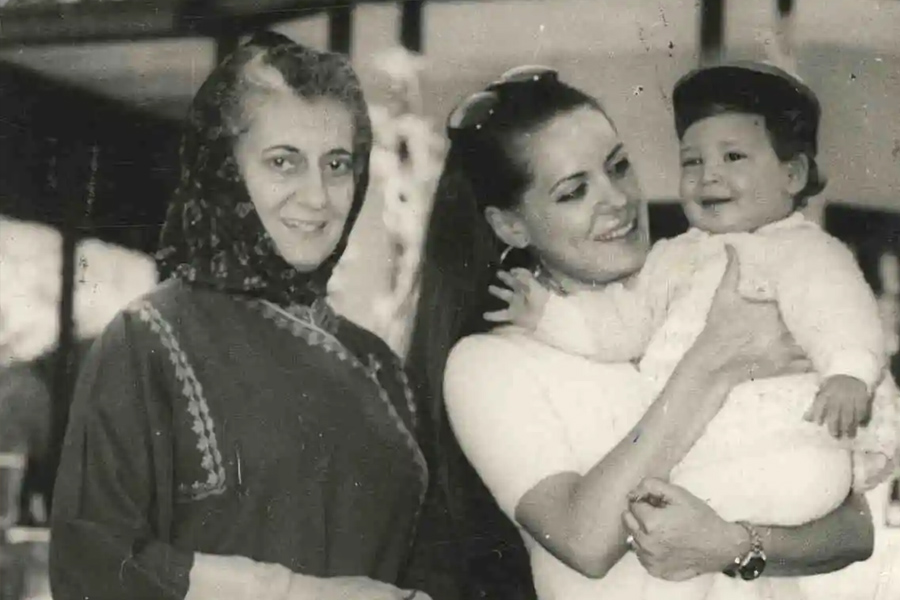
Domestic and private, Ratimai’s legacy is little chronicled. No public photos or letters or diaries provide a trace of her. Family trees, early paragraphs of her son’s bios, and Nehru-Gandhi footnotes mention her. Her name appears in social media discussions of Feroze’s Parsi background. A community story suggests Feroze may have been Dr. Shirin’s biological child, although this is unsubstantiated and remains a rumor. Despite such hubbub, Ratimai is best understood as a housewife who raised a family across cities and situations.
When history reads like a theater piece, some figures are behind the footlights, shaping outcomes quietly. Ratimai was that steady hand. She was the seam that stitched Bombay and Allahabad together, a private anchor in a public family’s story.
Timeline Highlights
| Year or period | Event |
|---|---|
| Late 1880s to early 1890s | Birth of Ratimai Commissariat, exact year not publicly documented |
| Early 1900s | Marriage to Jehangir Faredoon Ghandy, marine engineer |
| 1900s to 1912 | Births of five children: Dorab, Faridun Jehangir, Tehmina, Aloo, and Feroze |
| 12 September 1912 | Birth of Feroze Jehangir Ghandy in Bombay |
| Early 1920s | Death of Jehangir Faredoon Ghandy; Ratimai moves with Feroze to Allahabad |
| 1930s | Feroze becomes active in the independence movement |
| 1942 | Marriage of Feroze to Indira Nehru |
| 1944 | Birth of Rajiv Gandhi, Ratimai’s grandson |
| 1946 | Birth of Sanjay Gandhi, Ratimai’s grandson |
| 1950s | Feroze serves in Parliament and in journalism |
| 1960 | Death of Feroze Gandhi; Ratimai’s own death date is not publicly recorded |
Immediate Family at a Glance
| Name | Relation to Ratimai | Notes |
|---|---|---|
| Jehangir Faredoon Ghandy | Husband | Marine engineer with Killick Nixon, warrant engineer, died early 1920s |
| Dr. Shirin Commissariat | Sister | Surgeon at Lady Dufferin Hospital, Allahabad, unmarried |
| Dorab Ghandy | Son | Eldest, limited public details |
| Faridun Jehangir Ghandy | Son | Limited public details |
| Tehmina Kershashp | Daughter | Also referenced as Tehmina Ghandhy |
| Aloo Dastur | Daughter | Married within Parsi community |
| Feroze Jehangir Ghandy | Son | Born 12 September 1912; independence activist, journalist, Member of Parliament; married Indira Nehru; changed surname to Gandhi; died 1960 |
| Rajiv Gandhi | Grandson | Born 1944; later Prime Minister of India |
| Sanjay Gandhi | Grandson | Born 1946; prominent political figure |
Places and Daily Texture
- Nauroji Natakwala Bhawan, Khetwadi Mohalla, Bombay: A residential block in a bustling Parsi neighborhood where theater, commerce, and community overlapped. It was here that Ratimai presided over a young family, amid the mingled smells of spice, machine oil, and sea breeze.
- Lady Dufferin Hospital, Allahabad: A regional women’s healthcare hub. While Dr. Shirin’s position gave professional stability, Feroze emerged from the city’s political turmoil. Ratimai’s household work enabled such external pursuits, as a winter hearth keeping warm without being seen.
What We Do Not Know
- Exact birth and death dates for Ratimai have not surfaced in public records. Her life is therefore read through the dating of her marriage, her children’s births, and the known milestones of her son.
- Independent photographs or personal writings by Ratimai are not known to be publicly available, and no dedicated biography exists.
- Details about the lives of her elder children remain sparse in public memory, a reminder of how history magnifies some names while blurring others.
FAQ
Who was Ratimai Commissariat?
She was a Parsi homemaker from Bombay who became the mother of Feroze Gandhi and grandmother of Rajiv and Sanjay Gandhi.
Where did she live?
She lived in Khetwadi Mohalla in Bombay and later moved to Allahabad after her husband’s death.
Who was her husband?
Her husband was Jehangir Faredoon Ghandy, a marine engineer with Killick Nixon who died in the early 1920s.
How many children did she have?
She had five children: Dorab, Faridun Jehangir, Tehmina, Aloo, and youngest son Feroze.
Is there a record of her birth and death dates?
No exact dates are publicly documented; she was likely born in the late 1880s or early 1890s.
Did she have a career outside the home?
No public record shows paid employment; she managed her household and raised her children.
Why did she move to Allahabad?
She moved after her husband’s death to live with her sister, Dr. Shirin Commissariat, a surgeon at Lady Dufferin Hospital.
Is there proof that Dr. Shirin was Feroze’s biological mother?
No; such claims are unverified and remain speculative.
Did Feroze change the family surname?
Yes; he changed Ghandy to Gandhi, inspired by Mahatma Gandhi, with no blood relation implied.
Are there photographs or writings by Ratimai?
None are known to be publicly available.